The market research industry didn't set out to silence supplier relationships , it happened because managing dozens of sample vendors through email became unsustainable. What began as a practical workaround evolved into a structural shift: marketplaces and API platforms gained dominance not by delivering better quality, but by solving an operational bottleneck that email could not. This is the story of that trade-off, why online sample vendors now operate in a marketplace-driven world, and how new tools like SoftSight's FieldworkOS and SurveyGuard are closing the gaps that both traditional methods and API platforms left behind.
The Original Plan: Direct Supplier Relationships
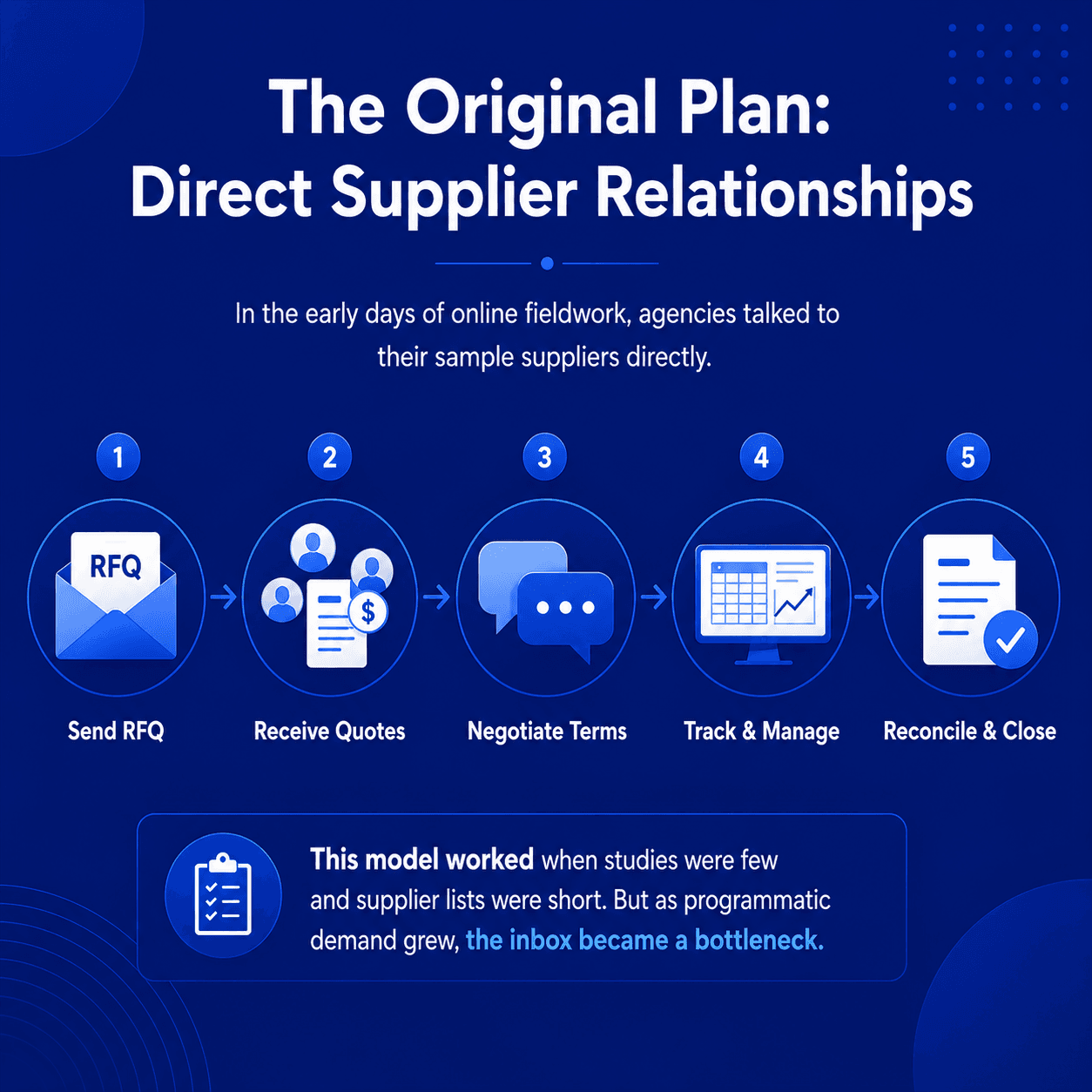
In the early days of online fieldwork, agencies talked to their sample suppliers directly. A project manager would:
- Send an RFQ (request for quote) by email to multiple panel vendors
- Wait for replies with CPI (cost per interview), incidence estimates, and start dates
- Negotiate terms over email threads
- Manually track launches, pacing, and quality issues in spreadsheets
- Reconcile invoices against delivery reports at the end
This model worked when studies were few and supplier lists were short. But as programmatic demand grew, the inbox became a bottleneck.
How Marketplaces Became Dominant
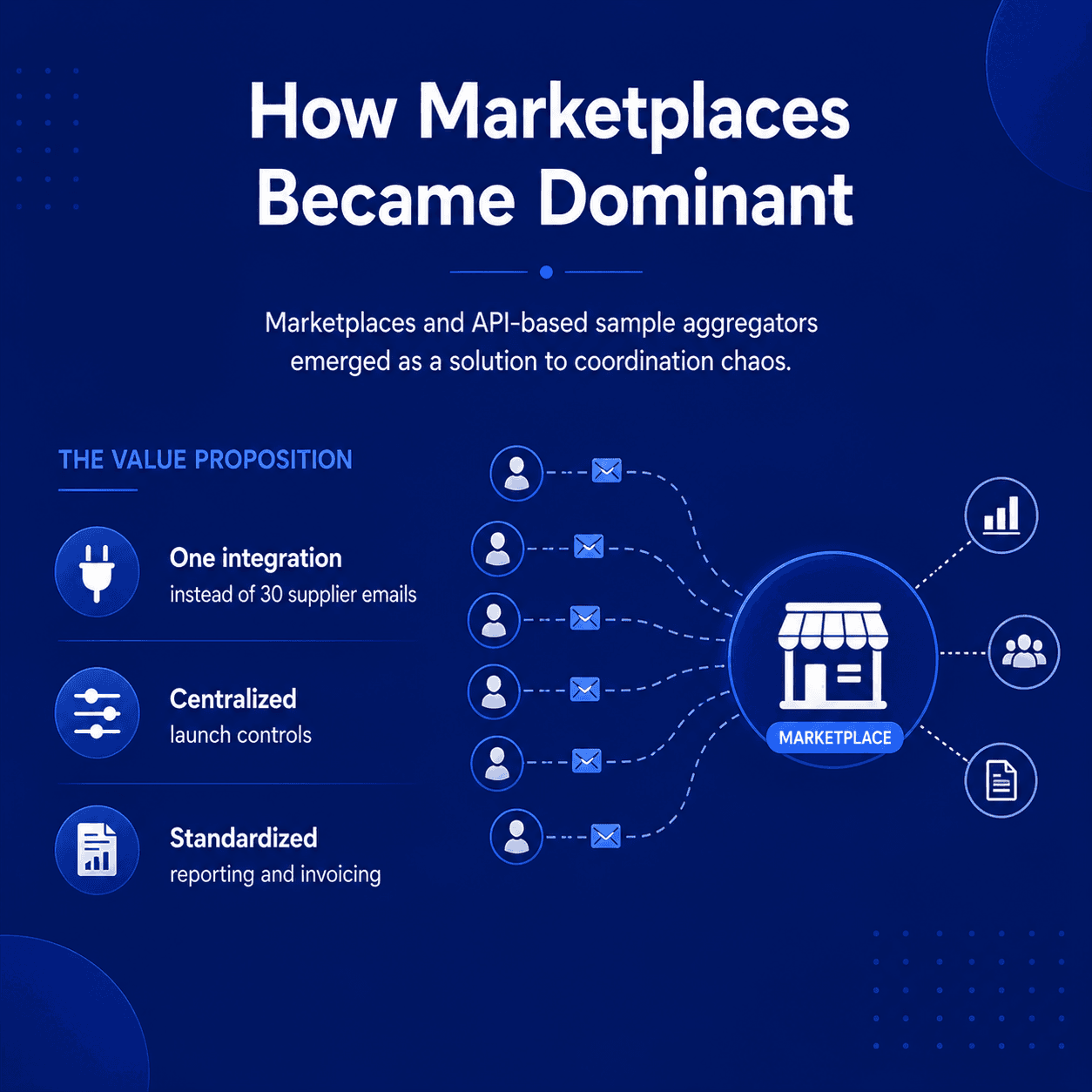
Marketplaces and API-based sample aggregators emerged as a solution to coordination chaos. Their value proposition was simple:
- One integration instead of 30 supplier emails
- Centralized launch controls
- Standardized reporting and invoicing
Agencies adopted them not because the sample quality was inherently better, but because managing multiple suppliers through email was inefficient. The industry accepted a trade-off: operational efficiency in exchange for reduced direct oversight and supplier transparency.
The Trade-Off the Industry Accepted
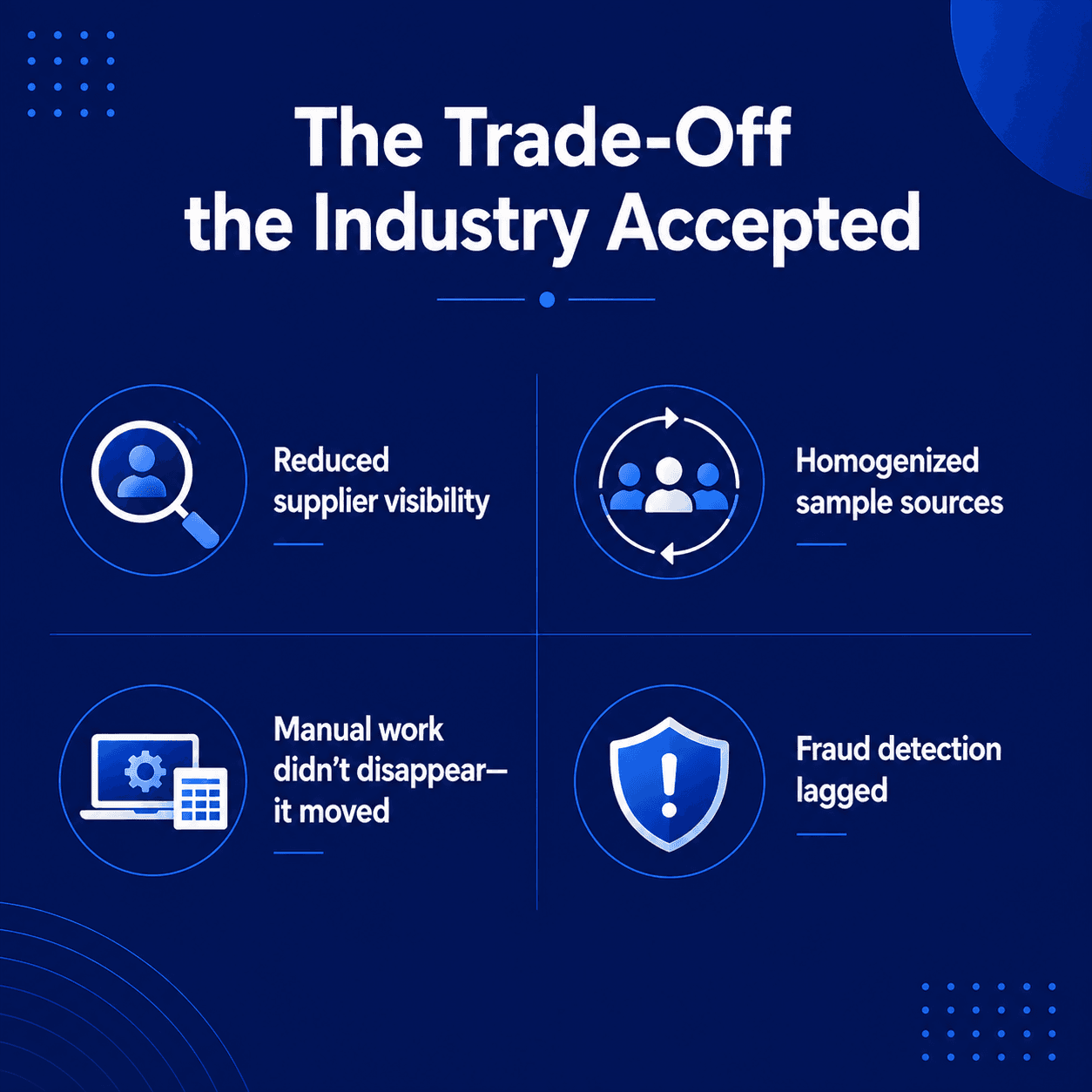
This shift came with consequences that are still being felt:
- Reduced supplier visibility: Agencies lost direct line-of-sight into which supplier delivered which completes, making quality troubleshooting harder.
- Homogenized sample sources: Marketplaces often route to the same underlying panels, reducing diversity and increasing fraud risk.
- Manual work didn't disappear—it moved: Instead of email, teams now juggle multiple dashboards, API documentation, and reconciliation spreadsheets.
- Fraud detection lagged: Many platforms focus on aggregation, not real-time, multi-layer fraud prevention at the respondent level.
Why Online Sample Vendors Still Face Manual Challenges
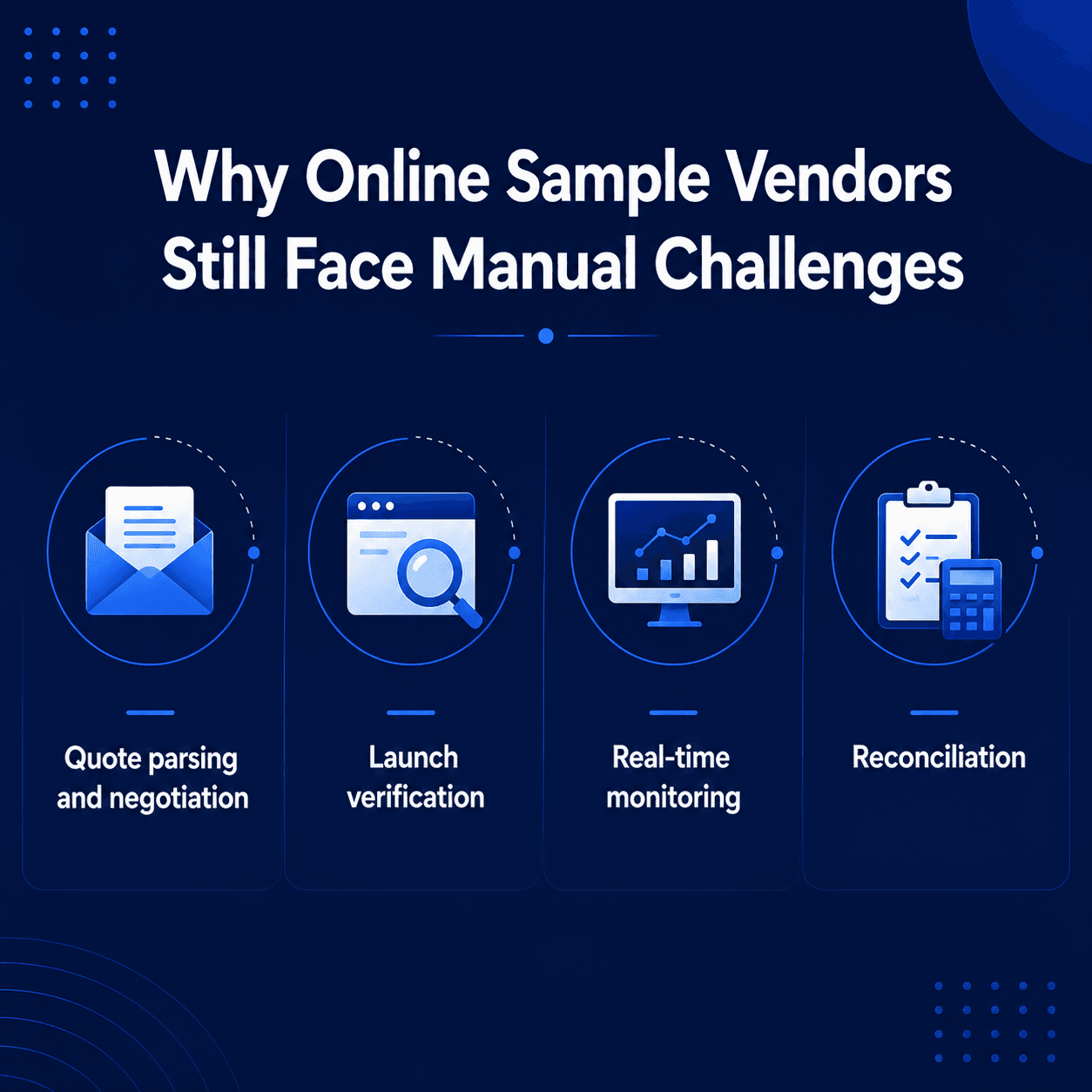
Even in a marketplace-driven world, online sample vendors and the agencies that buy from them report persistent manual pain points:
- Quote parsing and negotiation: RFQs still arrive via email; quotes must be manually entered or copied into comparison sheets.
- Launch verification: Confirming that a survey launched correctly, with the right links and quotas, often requires manual checks.
- Real-time monitoring: Teams still watch pacing, incidence, and quality metrics across multiple platforms or supplier portals.
- Reconciliation: Matching completes, costs, and quality flags across suppliers remains a manual, error-prone process.
- Fraud detection gaps: Many API platforms lack sub-200ms, 15-layer behavioral fraud scoring at the point of entry.
How SoftSight Products Close the Gaps
SoftSight builds operational infrastructure that automates what should never have been manual and detects what should never have gone undetected.
FieldworkOS: Automating the Supplier Lifecycle
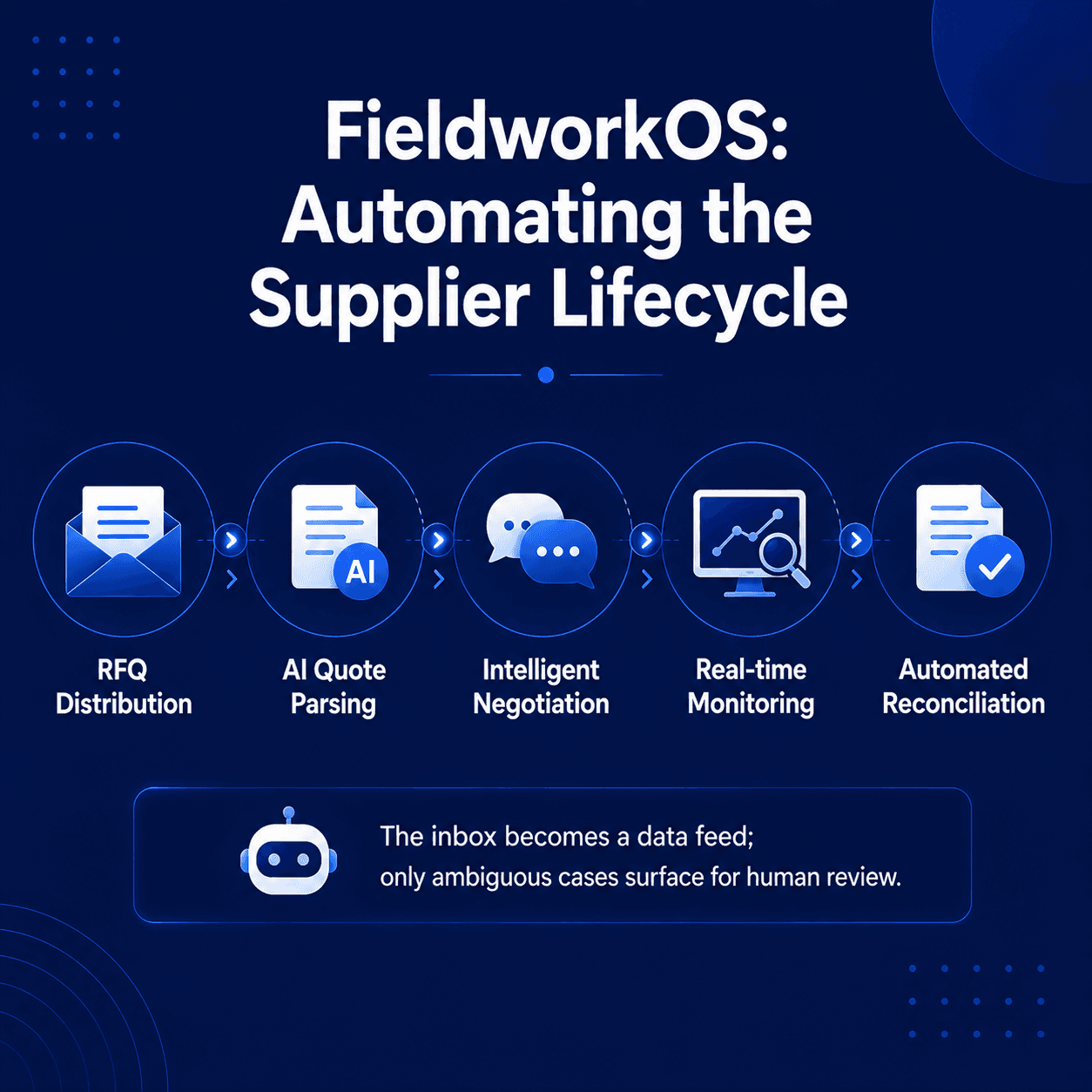
FieldworkOS automates the end-to-end supplier coordination lifecycle:
- RFQ distribution: Sends briefs to all suppliers at once.
- AI quote parsing: Reads supplier emails and structures quotes—no spreadsheets.
- Intelligent negotiation: Generates counter-offers backed by real data.
- Real-time monitoring: Watches pacing, quality fails, incidence vs. bid, geo/device mismatch, and more.
- Automated reconciliation: Matches delivery, cost, and quality with an evidence trail. The inbox becomes a data feed; only ambiguous cases surface for human review.
SurveyGuard: Real-Time Fraud Defense
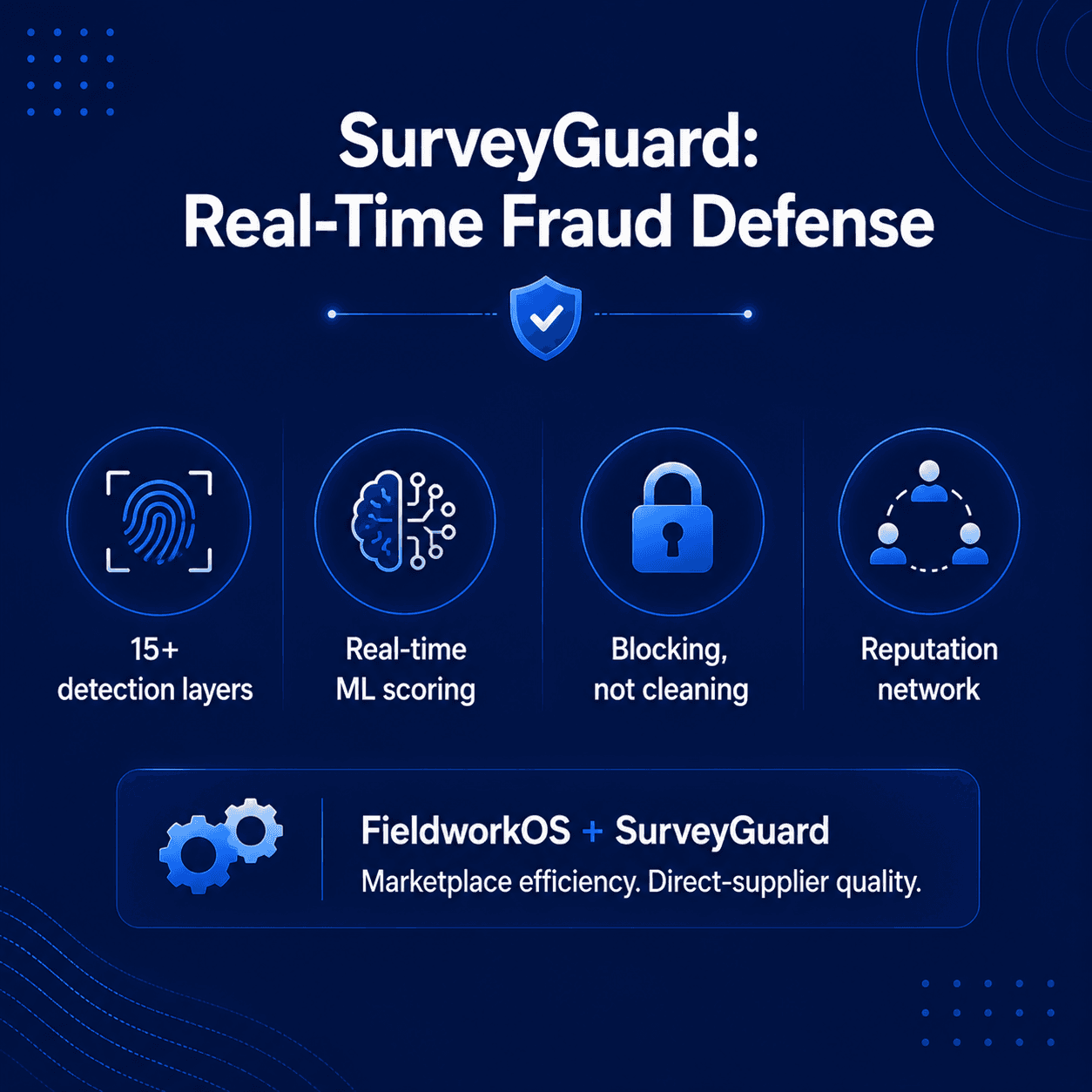
SurveyGuard sits at the entry point of every survey and evaluates each respondent across 15 detection layers in under 200 milliseconds—before a single fraudulent response enters the dataset.
- 15+ detection layers: From hardware fingerprints to natural hand tremor physics.
- Real-time ML scoring: 95%+ accuracy with less than 1% false positives.
- Blocking, not cleaning: Prevents fraud at the door instead of post-hoc data cleaning.
- Reputation network: Shares fraud signals across the network to protect all users.
Together, FieldworkOS and SurveyGuard give agencies the efficiency of a marketplace with the oversight and quality control of direct supplier relationships.
Traditional Methods vs. API Platforms:
| Dimension | Traditional Email/Spreadsheet Methods | Traditional Email/Spreadsheet Methods |
|---|---|---|
| Supplier Coordination | Manual RFQ emails, quote entry, negotiation threads | Automated quote collection, centralized dashboard |
| Launch Control | Manual link checks, quota setup per supplier | Centralized launch controls |
| Real-Time Monitoring | Spreadsheets, supplier portals, periodic checks | Unified pacing/incidence dashboards |
| Fraud Detection | Basic checks, post-fieldwork cleaning | Some built-in fraud filters |
| Reconciliation | Manual invoice matching, email trails | Automated reporting, some reconciliation |
| Supplier Transparency | Direct relationship, full visibility | Aggregated view, less supplier-level detail |
| Sample Diversity | Direct access to varied panels | Risk of homogenized sources |
The Path Forward
The industry's original plan wasn't to stop talking to suppliers—it was to run better studies, faster. Marketplaces solved the coordination problem but introduced new gaps in transparency, quality control, and manual overhead. SoftSight's FieldworkOS and SurveyGuard restore the best of both worlds: the efficiency of automation with the oversight and fraud prevention that direct relationships once provided.