Between ten and thirty percent of online survey responses are fraudulent. The tools most teams use to catch them were designed for a different era.
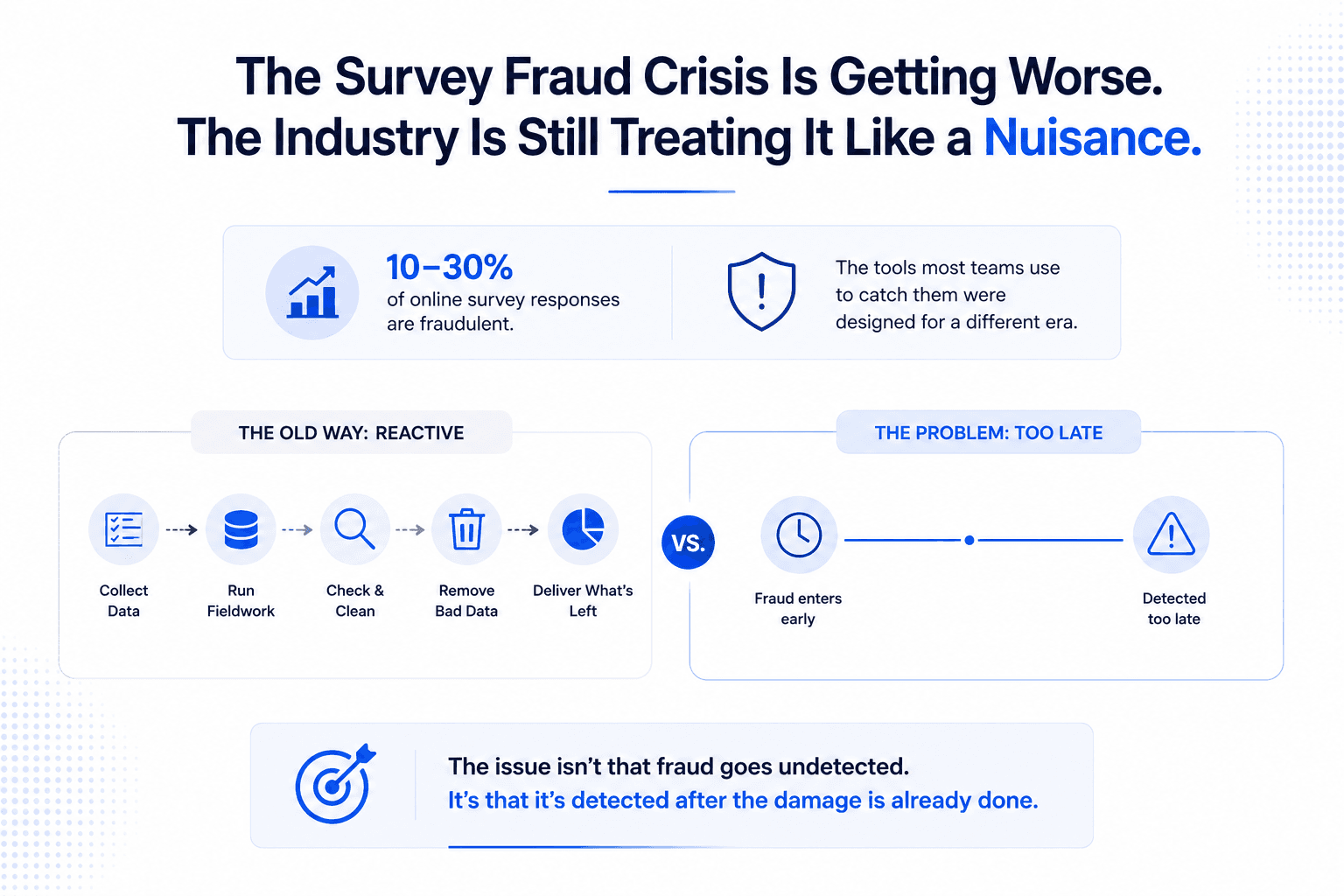
In 2026, data quality is the most discussed topic in the market research industry. It appears in every trend report, every conference agenda, and every conversation between research directors worrying about what is actually in their datasets. And yet the way most teams approach quality control in practice has not materially changed in a decade.
The dominant model is still retrospective: collect the data, then clean it. Run the fieldwork, then check for speeders and straight-liners and open-end responses that are clearly copied from somewhere else. Flag the suspicious cases. Remove them from the dataset. Deliver what is left.
The problem with this model is not that it fails to catch fraud. It is that it catches fraud too late.
What the fraud landscape actually looks like now
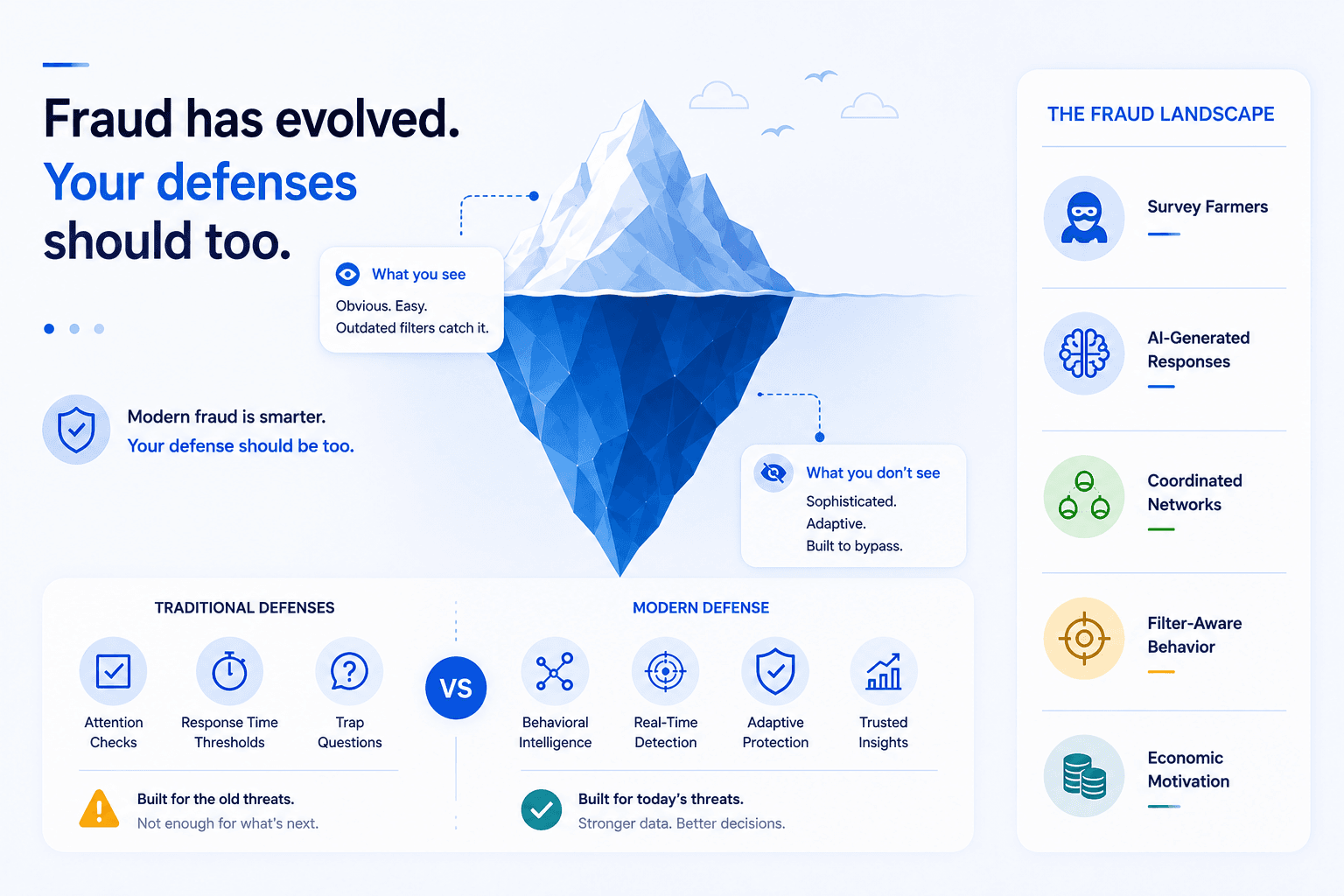
Online survey fraud has evolved significantly since the days of simple bots filling in random answers. The current threat environment includes professional survey farmers who maintain multiple panel accounts across different providers, AI-generated responses that pass standard attention checks with no difficulty, coordinated networks that game incentive structures across multiple simultaneous studies, and increasingly sophisticated answer patterns designed specifically to pass the quality filters that researchers typically apply.
The industry's existing defenses were not designed for this environment. Attention checks, trap questions, and response time thresholds were built to catch lazy or careless respondents, not adversarial actors who have studied and gamed those exact mechanisms.
The real cost is not the fraudulent responses. It is the decisions made from them.
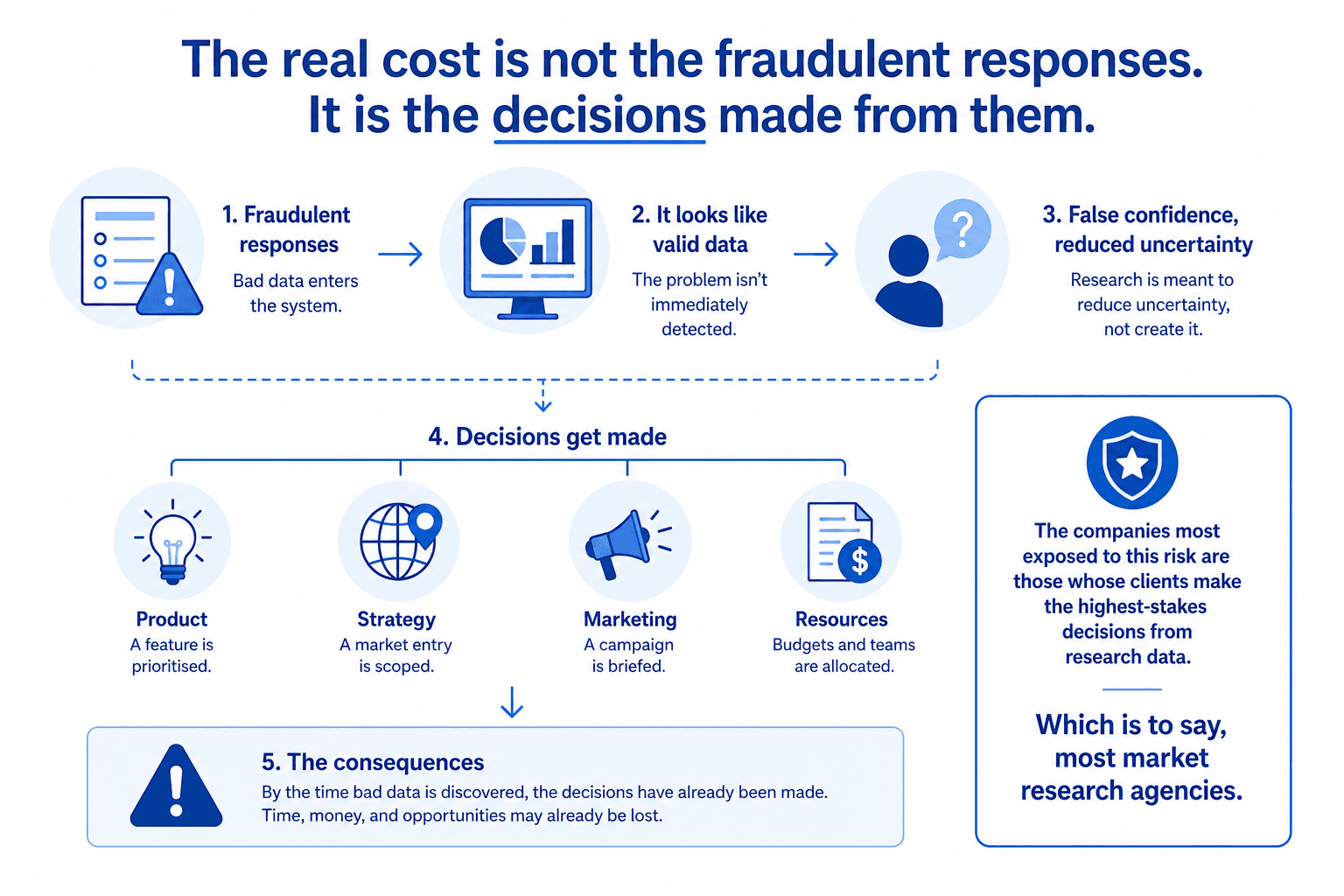
This distinction matters more than the industry typically acknowledges. When bad data reaches a client, it does not disappear when someone eventually notices the quality problem. By that point, the data has already informed decisions. A product feature has been prioritised. A market entry strategy has been scoped. A campaign has been briefed. The research was supposed to reduce uncertainty. Instead, it has added a new kind of it.
The companies most exposed to this risk are the ones whose clients make the highest-stakes decisions from research data. Which is to say, most market research agencies.
What better quality control actually requires
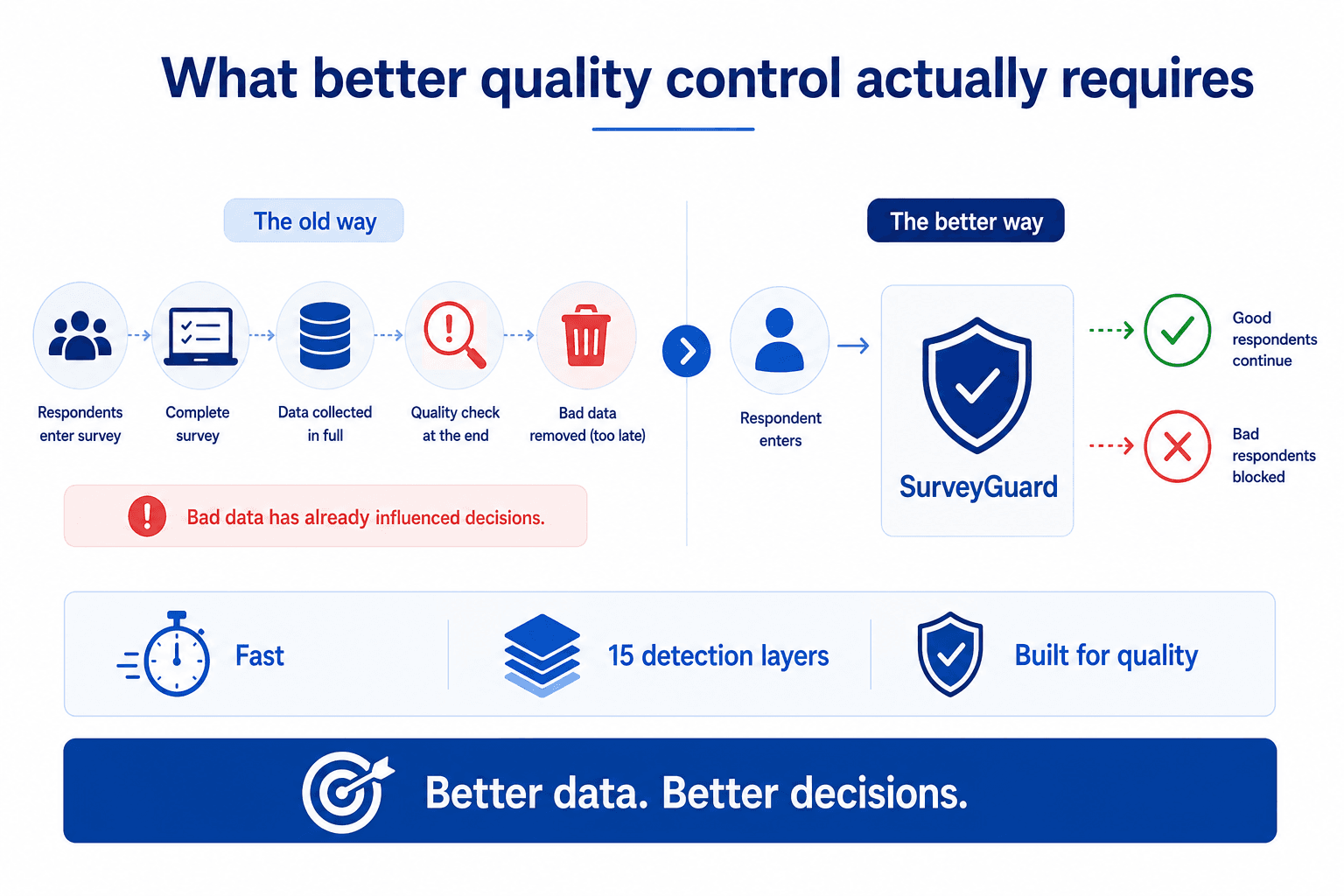
Meaningful improvement in data quality requires moving the control point from the end of the field period to the beginning of the respondent journey. Every respondent needs to be evaluated before a single response enters the dataset, not after the entire dataset has been collected.
SurveyGuard does this across fifteen detection layers in under two hundred milliseconds per respondent. The speed matters because the volume of online survey traffic means that quality checks cannot be manual or slow. The fifteen layers matter because the fraud environment is sophisticated enough that no single check is sufficient on its own.
The goal is not just cleaner data. It is data that earns the decisions that will be made from it.
“The fraud detection methods most teams rely on were designed to catch careless respondents. The fraud they are facing now is deliberately designed to pass those checks.”
SoftSight — SurveyGuard screens every respondent across 15 detection layers, in real time. softsight.io