Adopting AI means using a tool. Integrating AI means rebuilding the workflow around it. The research industry is still mostly at step one.
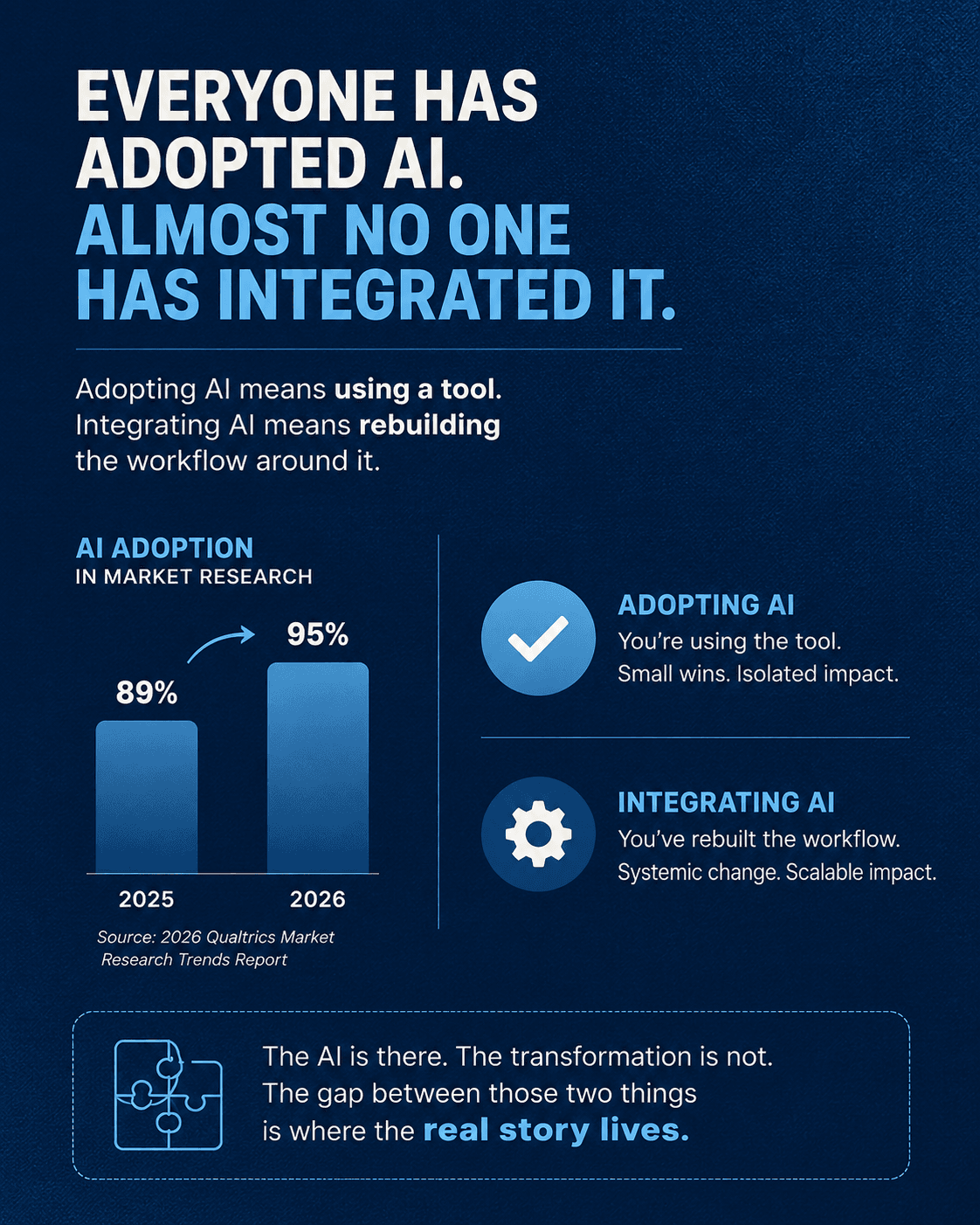
The numbers are striking. According to the 2026 Qualtrics Market Research Trends report, ninety-five percent of researchers now use AI tools regularly or are experimenting with them. A year earlier, that figure was eighty-nine percent. The trajectory is clear: AI adoption in market research is nearly universal.
And yet most research operations teams are still running the same manual workflows they were running five years ago. The AI is there. The transformation is not. The gap between those two things is where the real story lives.
Adoption versus integration
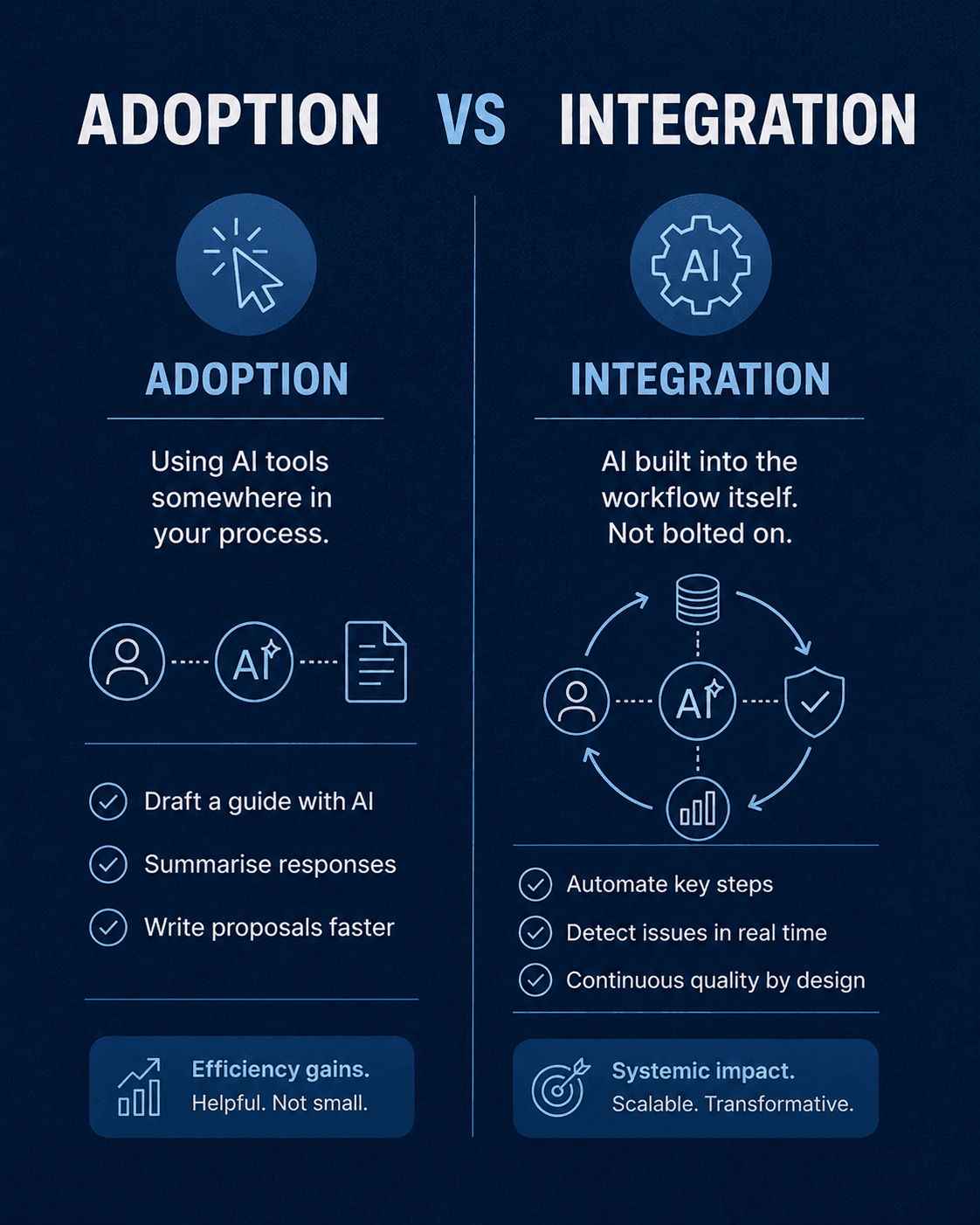
Adoption means using an AI tool somewhere in your process. A researcher uses ChatGPT to draft a discussion guide. An analyst uses an AI summarisation tool to process open-ended responses. A manager uses a generative AI platform to help write a proposal. These are real efficiency gains, and they are not nothing.
Integration means the AI is embedded in the workflow itself, not bolted on beside it. The system routes supplier quotes automatically. The platform flags fielding anomalies in real time without a human having to check. The quality assurance process runs continuously rather than at scheduled review points. The difference is not the presence of AI. It is whether the AI changes what the human has to do.
Why integration is harder than it looks
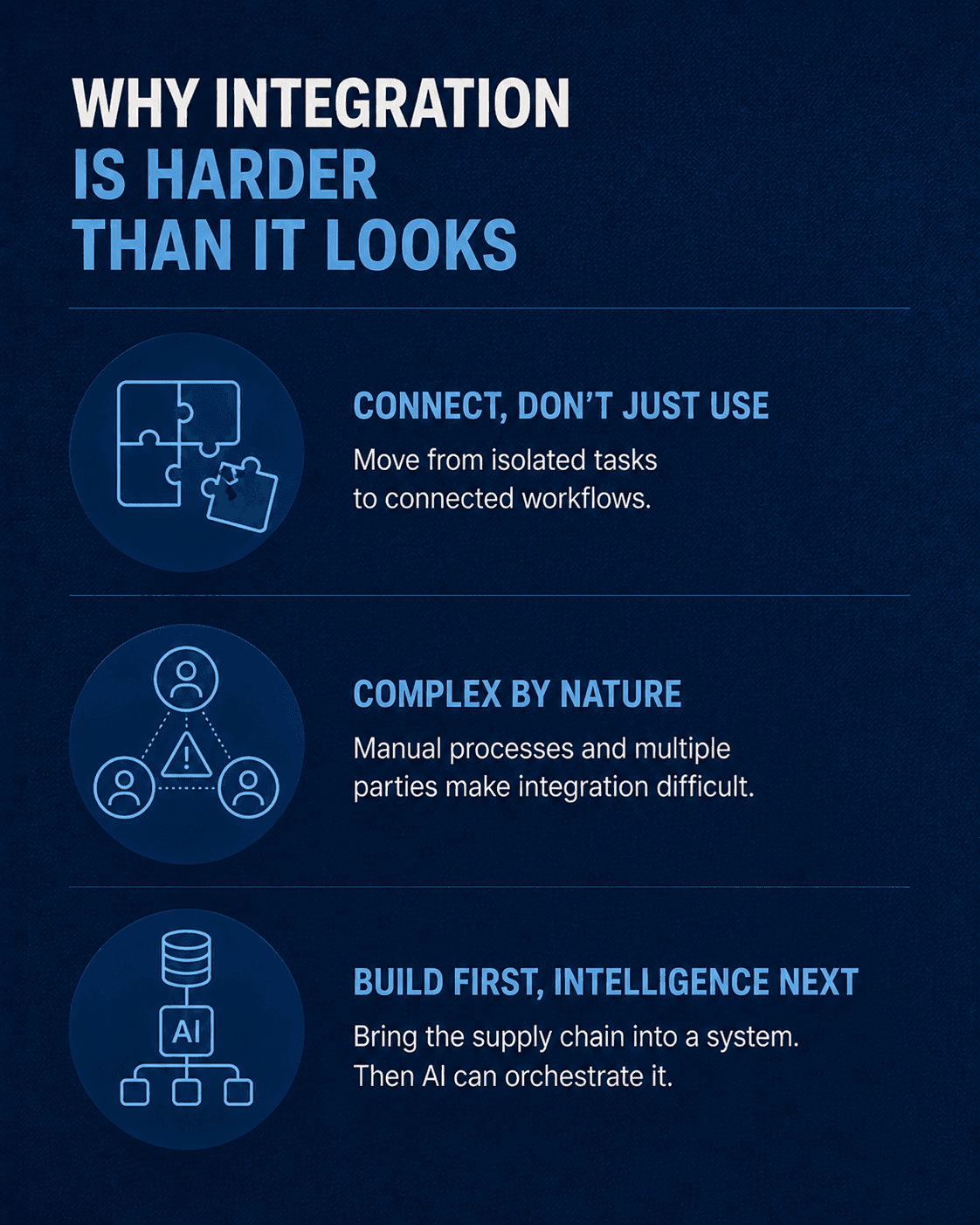
The Qualtrics report identifies this as the defining challenge for 2026: moving from experimentation to orchestration. Teams that figured out how to adopt AI in isolated tasks now face the harder question of how to connect those tasks into a coherent, automated system.
For research operations specifically, the challenge is compounded by the multi-party nature of the fieldwork supply chain. You cannot integrate AI into a process that still depends on email chains, manual data entry, and supplier relationships managed through personal contacts rather than structured systems. Integration requires the underlying process to be structurable in the first place.
This is why SoftSight starts with the operational infrastructure before adding intelligence on top of it. AI cannot orchestrate a supply chain that lives in someone's inbox. The first step is bringing that supply chain into a system where orchestration is possible at all.
What genuine integration looks like
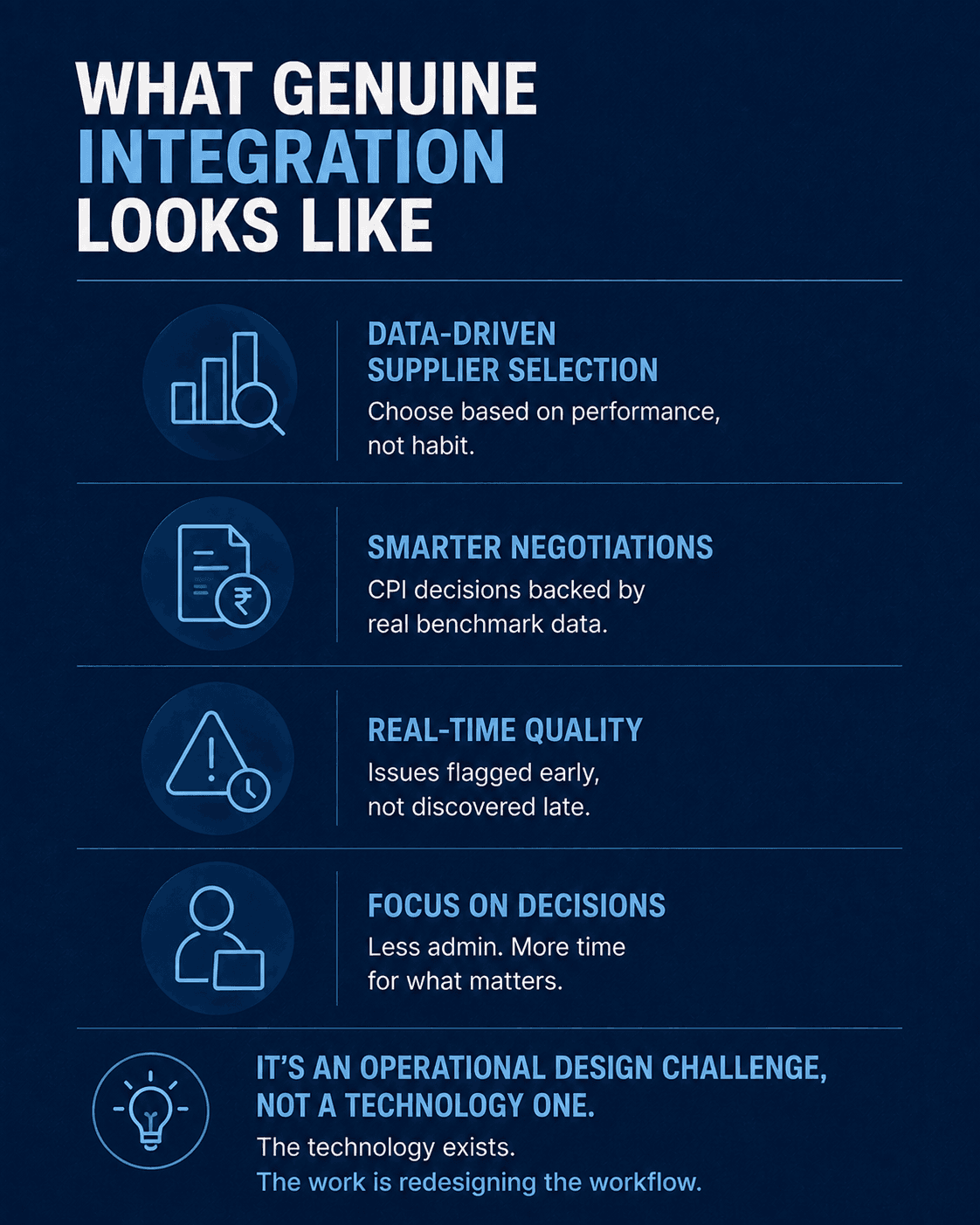
When AI is genuinely integrated into fieldwork operations, several things happen that do not happen with adoption alone. Supplier selection becomes data-driven, drawing on historical performance rather than habit and relationships. CPI negotiations are grounded in real benchmark data rather than gut feel. Quality flags surface in real time rather than at the end of a field period. Project managers spend their time on decisions rather than on the admin that surrounds decisions.
The shift from adoption to integration is not primarily a technology question. It is an operational design question. The technology exists. The harder work is redesigning the workflow to make use of it.
“Adoption means you added a tool. Integration means you changed the job. Most of the industry has done the first thing and called it the second.”