What happens when supplier intelligence is left to chance
The Price of Not Knowing

Every supplier quote that arrives in an inbox contains two prices. The one that is written. And the one that could have been negotiated. The gap between them is where agencies lose money - not through malice, but through ignorance.
Panel suppliers are not dishonest. They are rational. Their opening quote is positioned to test the buyer's knowledge. If the buyer knows the market, knows the supplier's history, knows what similar studies have cost, the supplier will move. If the buyer knows nothing, the supplier will not move - because there is no reason to.
Most market research agencies are buyers who know nothing. Not because their people are unintelligent. Because their systems remember nothing.
The Memory Problem
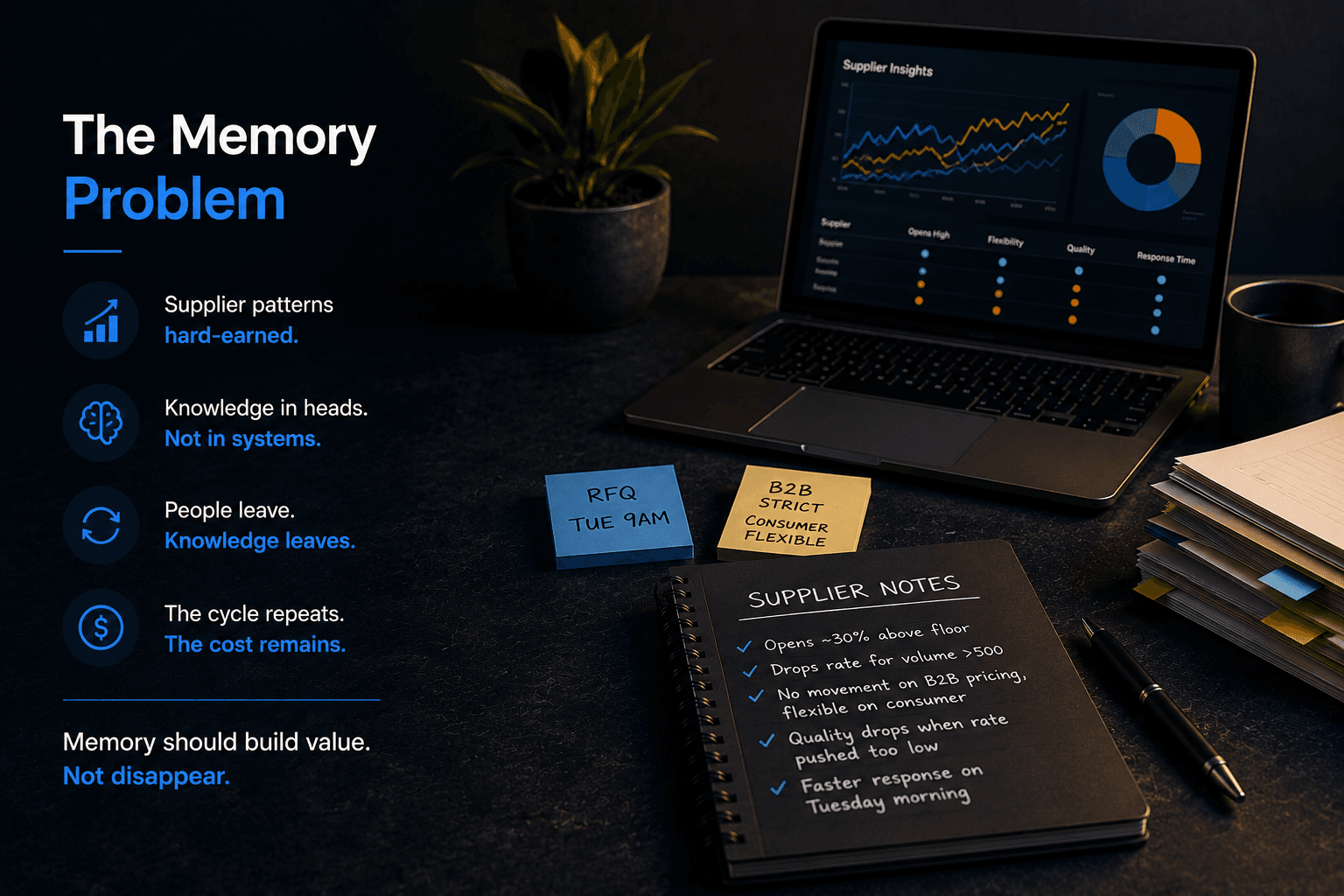
Consider what an experienced project manager knows after five years. Which supplier consistently opens thirty percent above their floor. Which supplier drops their rate for volume above five hundred completes. Which supplier never budges on B2B pricing but is flexible on consumer studies. Which supplier's quality degrades when their rate is pushed too low. Which supplier responds faster when the RFQ is sent on Tuesday morning rather than Friday afternoon.
his knowledge is valuable. It is also fragile. It exists in one person's head, in one person's inbox, in one person's collection of mental notes. It is not written down. It is not searchable. It is not accessible to anyone else on the team. And when that person leaves - which they do, because carrying this much unrecorded expertise is exhausting - the knowledge disappears with them.
The replacement starts from zero. She relearns every supplier's behavior through trial and error. She pays the same tuition her predecessor paid. She makes the same mistakes. She discovers the same patterns. And eventually, she too leaves, taking her accumulated knowledge with her, perpetuating a cycle of institutional amnesia that costs the agency money on every single project.
“An agency that does not remember what its suppliers have done is an agency that pays full price for every lesson, every time."”
How Decisions Are Made in the Dark
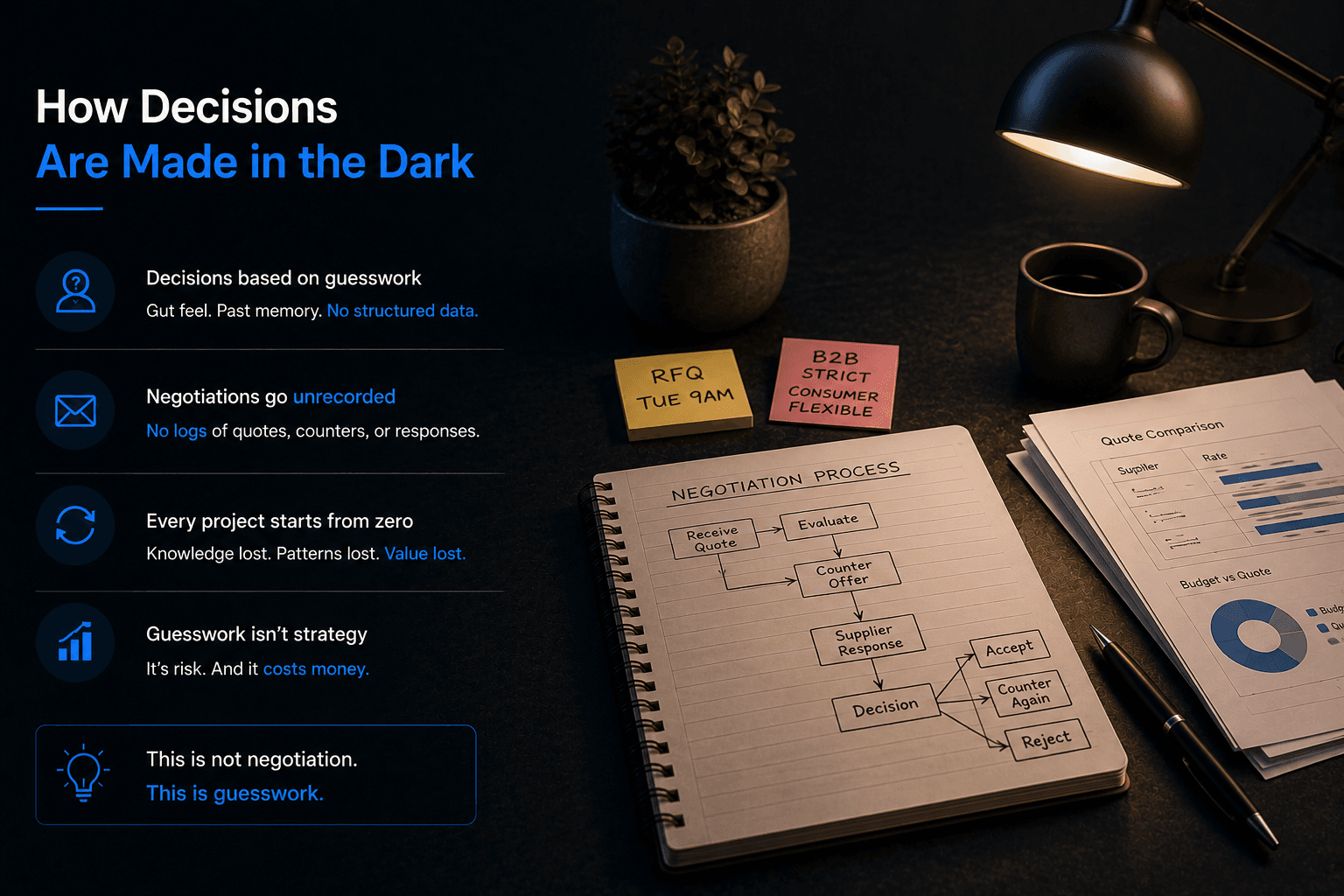
Watch a project manager negotiate a supplier quote. The process is revealing. She opens the email. She reads the CPI. She compares it to the client budget. She thinks about what this supplier charged last time. She cannot remember exactly. She thinks about what other suppliers are charging. She does not have that information organized. She thinks about whether the supplier has room to move. She has no data on that either.
So she guesses. She drafts a counter-offer based on intuition, on mood, on how much time she has before the client deadline. She sends it. The supplier responds. She evaluates the response. She counters again, or accepts, or rejects. The process concludes. The rate is set. The project proceeds.
And no one records what happened.
he opening quote is not logged. The counter-offer is not logged. The supplier's response is not logged. The final agreed rate is not logged. The next time this agency works with this supplier, the process begins exactly as it began before: with a project manager who may or may not be the same person, who may or may not remember what happened, who may or may not have access to the email thread from the previous negotiation.
This is not negotiation. This is guesswork dressed up as commercial judgment.
The Three Costs of Ignorance
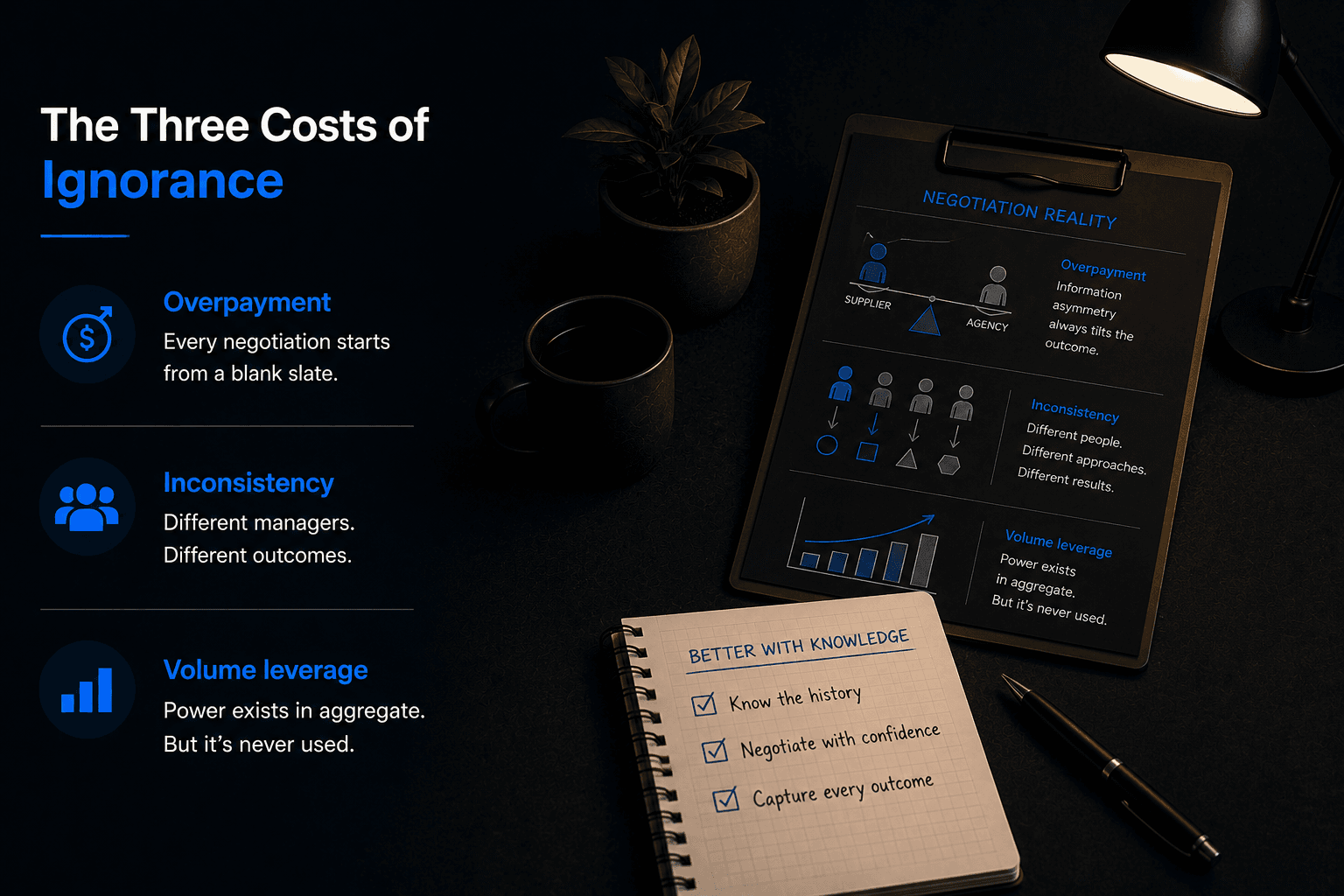
- Overpayment on every project. Without historical data, every negotiation starts from a blank slate. The supplier knows their own pricing history. The agency does not. The information asymmetry tilts the outcome toward the party with better information - which is always the supplier.
- inconsistency across the team. Different project managers negotiate differently. One is aggressive. One is accommodating. One has been around long enough to remember some supplier patterns. One started last month and knows nothing. The same supplier receives different treatment from the same agency depending on who happens to be managing the project. The supplier notices. They adjust their strategy accordingly.
- Volume leverage that evaporates. An agency placing twelve studies per quarter with a supplier has negotiating power that an agency placing two studies does not. But if each study is negotiated independently, by different people, at different times, with no reference to aggregate volume, that power is never exercised. The supplier treats each project as a separate transaction because the agency treats each project as a separate transaction
What Supplier Intelligence Looks Like
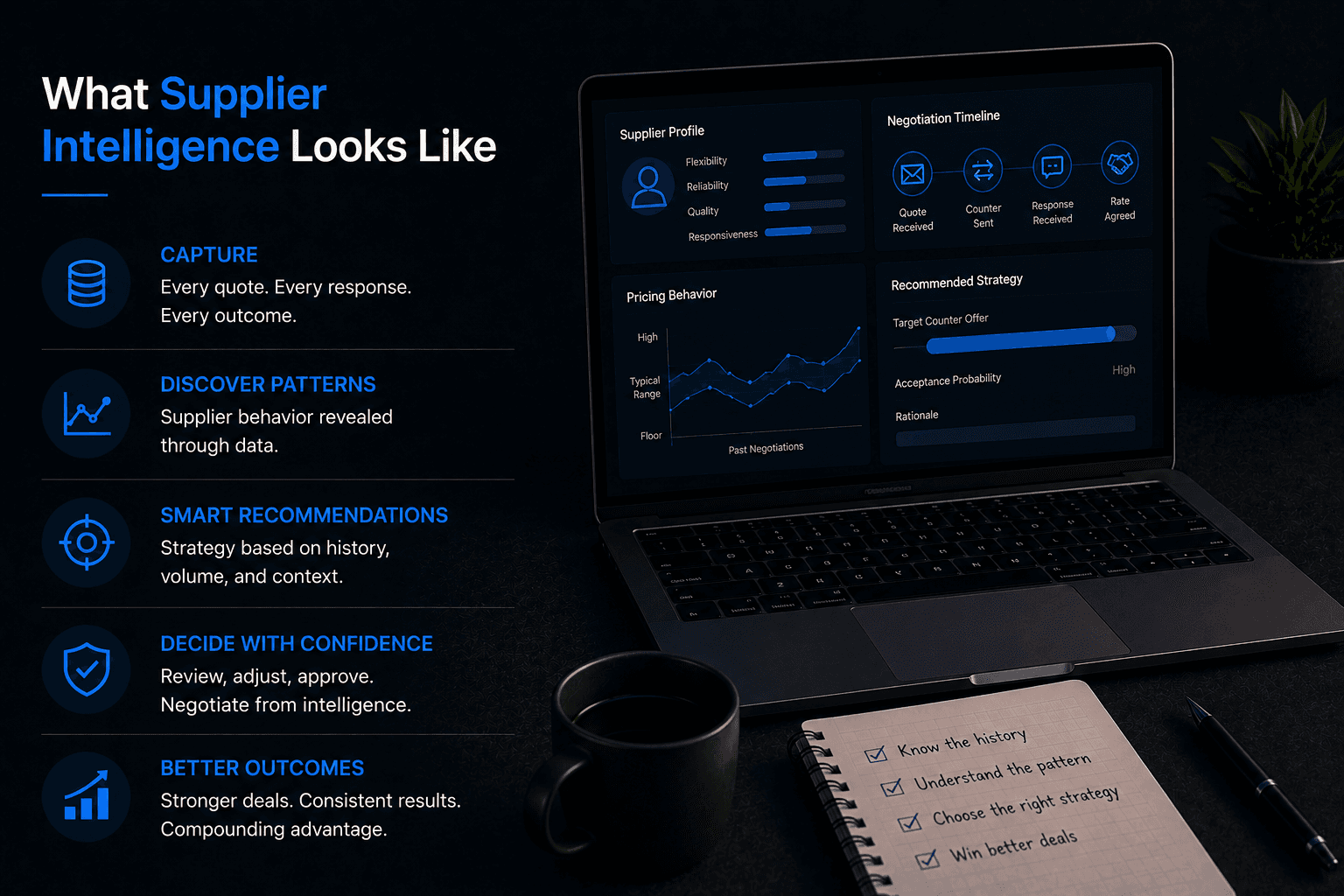
The solution is not better negotiators. It is a system that remembers so the negotiators do not have to.
A supplier intelligence platform captures every interaction automatically. Every quote received. Every counter-offer sent. Every response received. Every rate agreed. Every deadline met or missed. Every quality issue flagged. Every negotiation concluded. All of it structured, searchable, and available to every project manager on the team.
Over time, patterns emerge. Supplier A opens high and drops fast. Supplier B holds firm on consumer studies but is flexible on healthcare. Supplier C's quality degrades when their rate is pushed below a threshold. Supplier D responds to volume-based discounts but not to urgency-based pressure. These patterns are not intuitions. They are data.
When a new quote arrives, the system does not wait for a project manager to read the email. It evaluates the quote immediately against the supplier's history. It identifies the gap between the opening rate and the supplier's typical floor. It calculates the probability of acceptance for different counter-offer levels. It recommends a strategy based on the agency's volume with that supplier, the project's timeline pressure, and the competitive landscape of alternative suppliers.
The project manager does not guess. She decides. She reviews the system's recommendation, applies her judgment where the data is ambiguous, and approves or adjusts. The negotiation proceeds from intelligence, not intuition.
The Compound Advantage
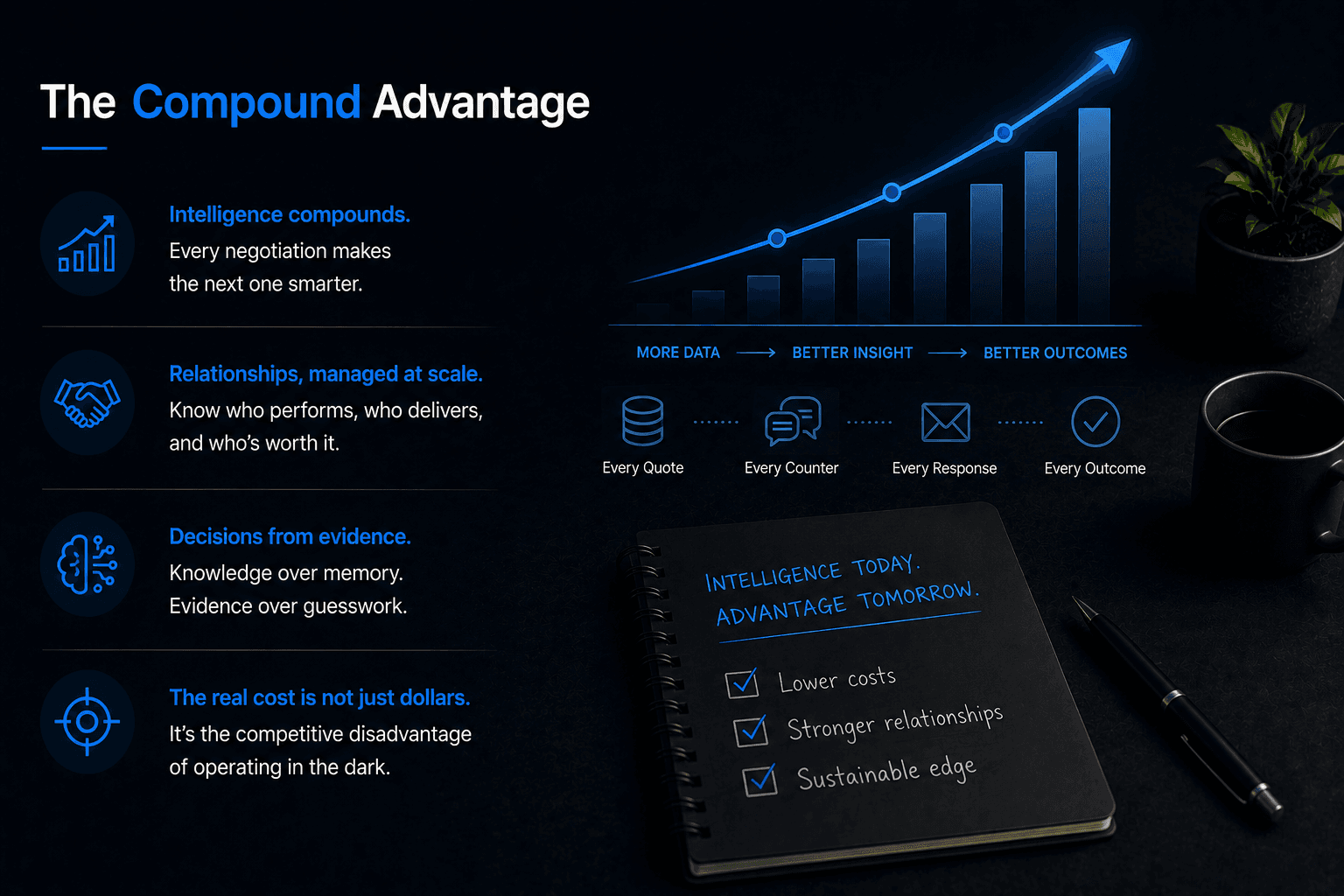
The value of supplier intelligence compounds over time. The first project benefits modestly. The tenth project benefits significantly. The hundredth project benefits dramatically. Because every negotiation updates every supplier's profile. Every acceptance or rejection refines the model. Every new data point makes the next recommendation more accurate
This is not just cost optimization. It is relationship management at scale. The system knows which suppliers perform well under pressure and which buckle. It knows which suppliers deliver consistent quality and which are unreliable. It knows which suppliers are worth premium rates and which are not worth the minimum. It transforms a network of individual transactions into a portfolio of managed commercial relationships.
The agencies that build this capability are not just spending less on sample. They are building a structural advantage that competitors cannot replicate without the same data foundation. They are negotiating from knowledge while their competitors negotiate from memory. They are making decisions from evidence while their competitors make decisions from guesswork.
The price of not knowing is not just the extra dollars paid on each project. It is the strategic blindness that comes from operating without the information that should have been captured years ago. It is the competitive disadvantage that accumulates with every negotiation that proceeds in the dark.
“"The agencies that will lead the next decade are those that stopped guessing and started knowing."”